
The Marble Game
Conceptual Project
Scope: Logo Design, Package Design, Branding
Role: Lead Designer
The Marble Game is a luxurious wooden board game for 2 to 4 players where the main goal is to be the first player to move all four of your marbles from your starting "base" area, around the game board, and into your "home" spaces.
It is a board game that I have played with my family all of my life, a generational game for us that is the main event of so many holidays and dinner parties. The game fosters connection and competition. For as long as I can remember, The Marble Game is all I’ve ever known it to be called. It wasn’t until researching for this project that I discovered it is also called Aggravation.
Aggravation, a board game trademarked in 1959 by BERL Industries and published in 1962, is an American version of the ancient Indian “cross and circle” board game called Pachisi, a very similar race around the board game with 2-4 players.
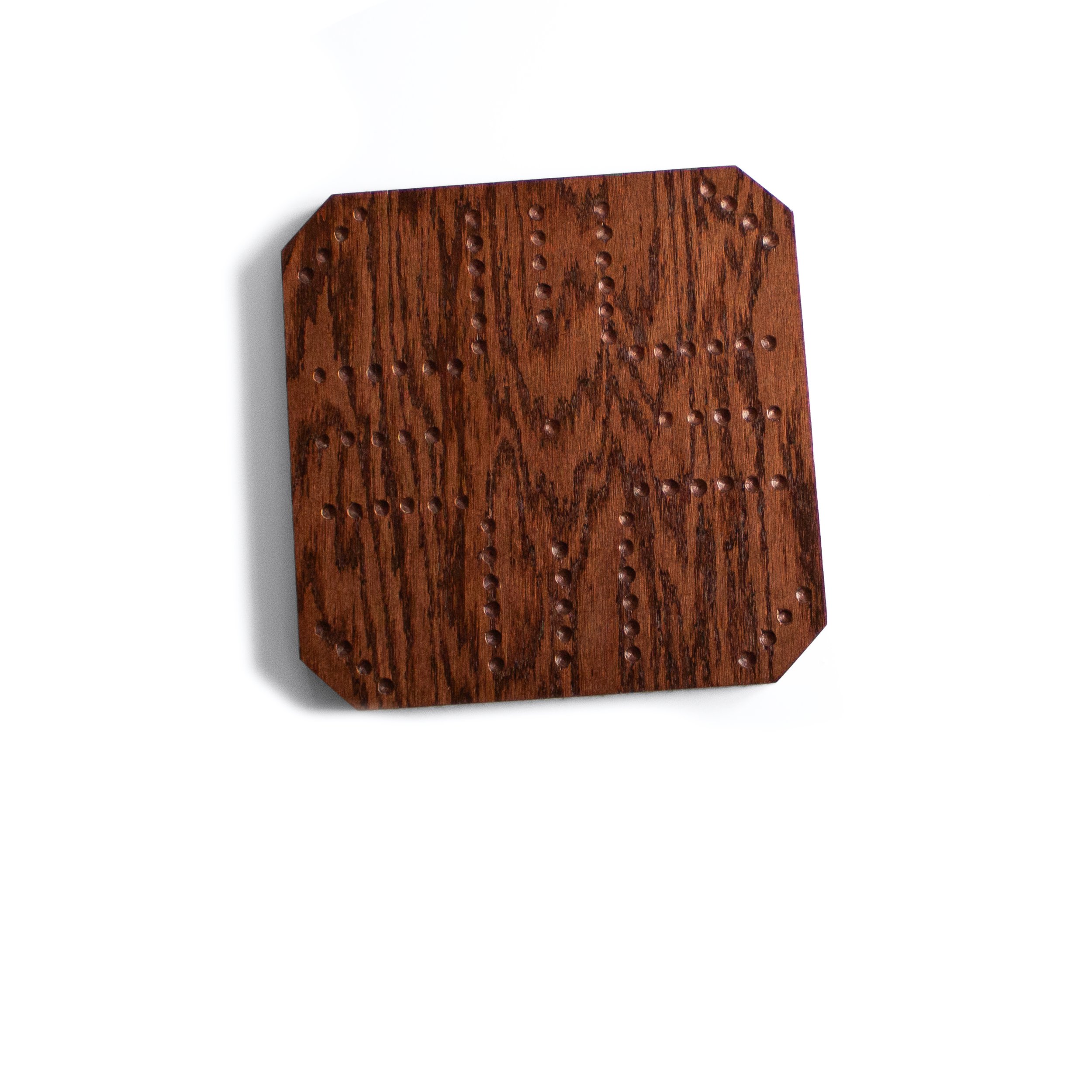
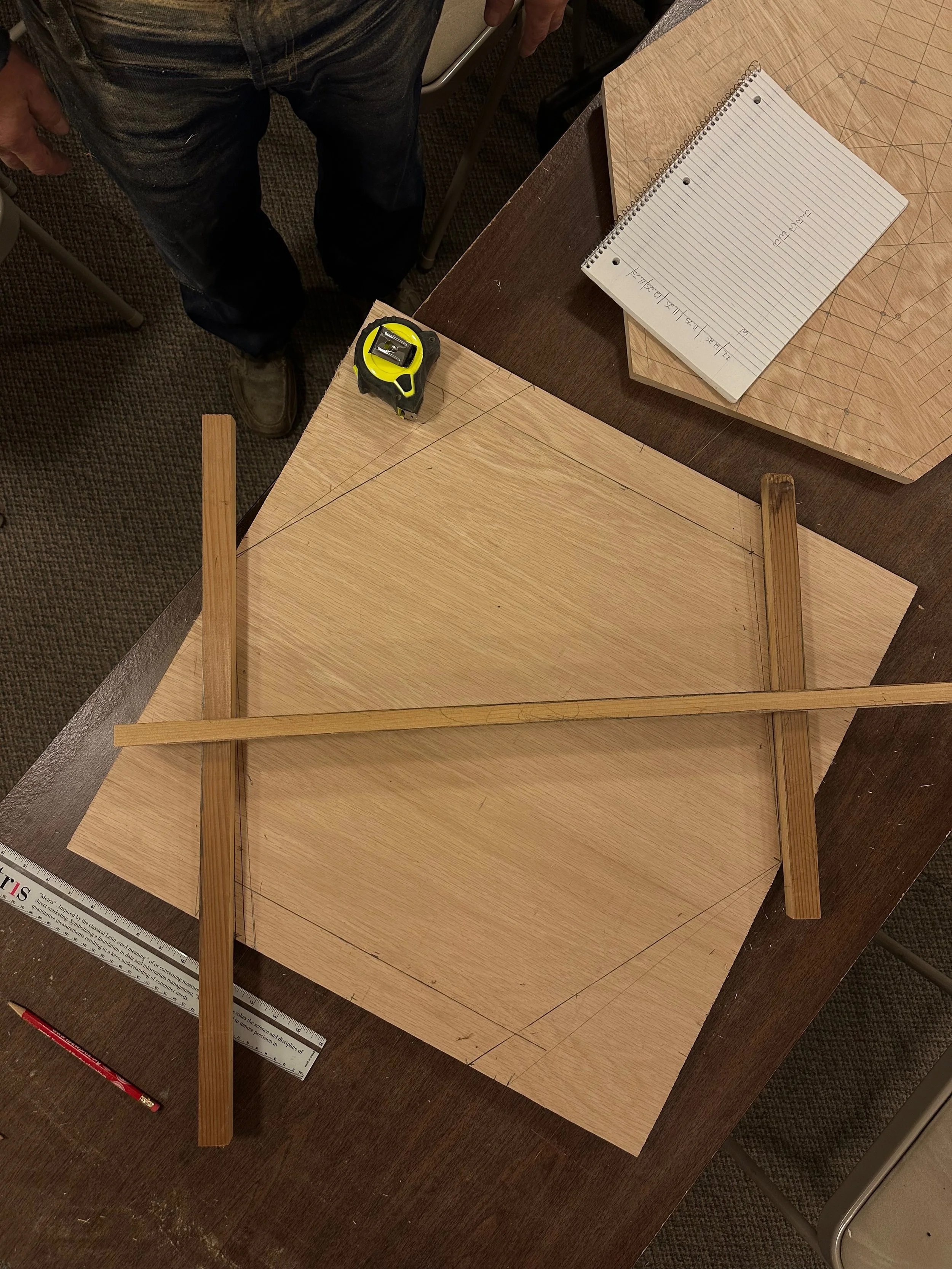
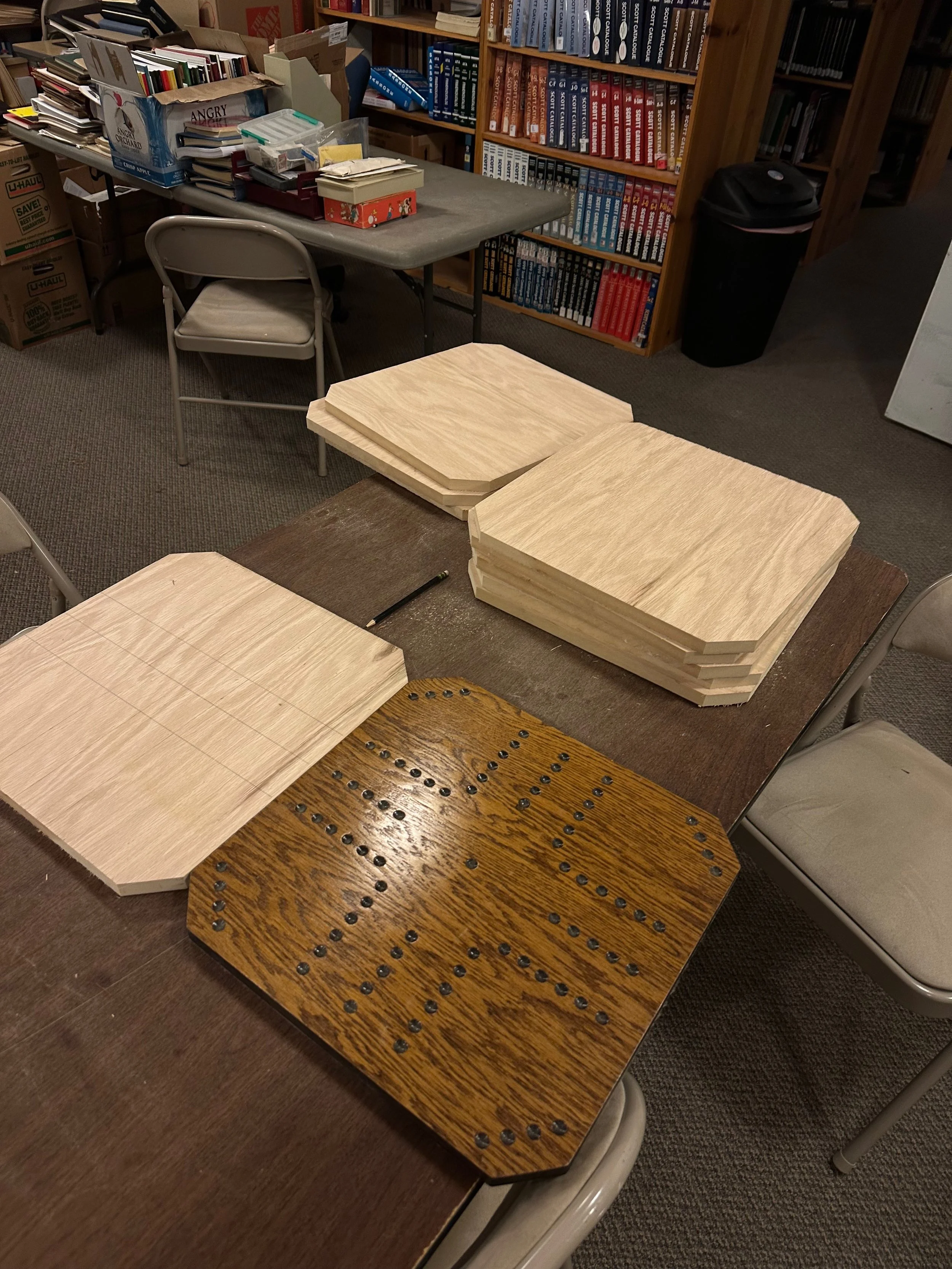
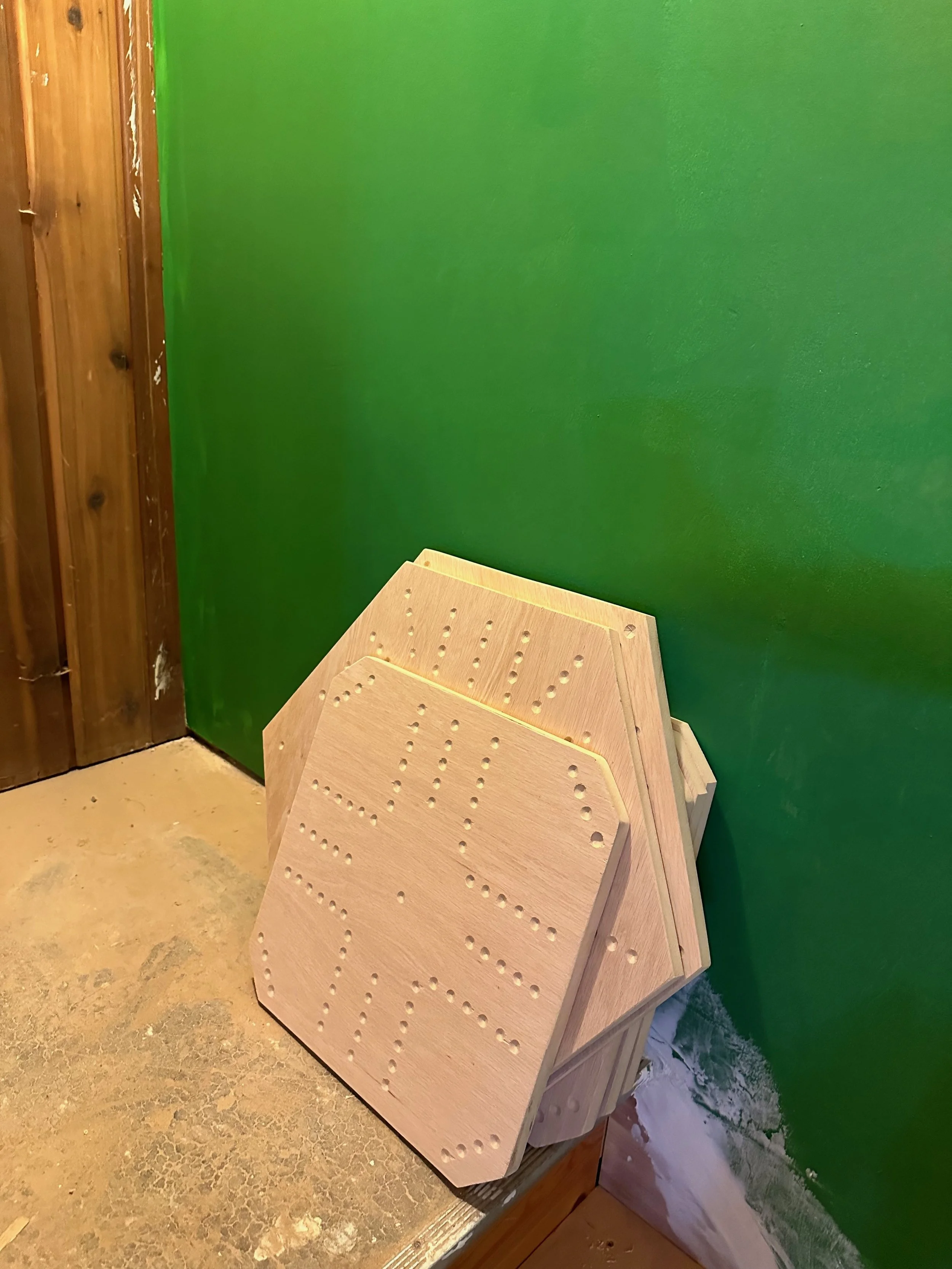
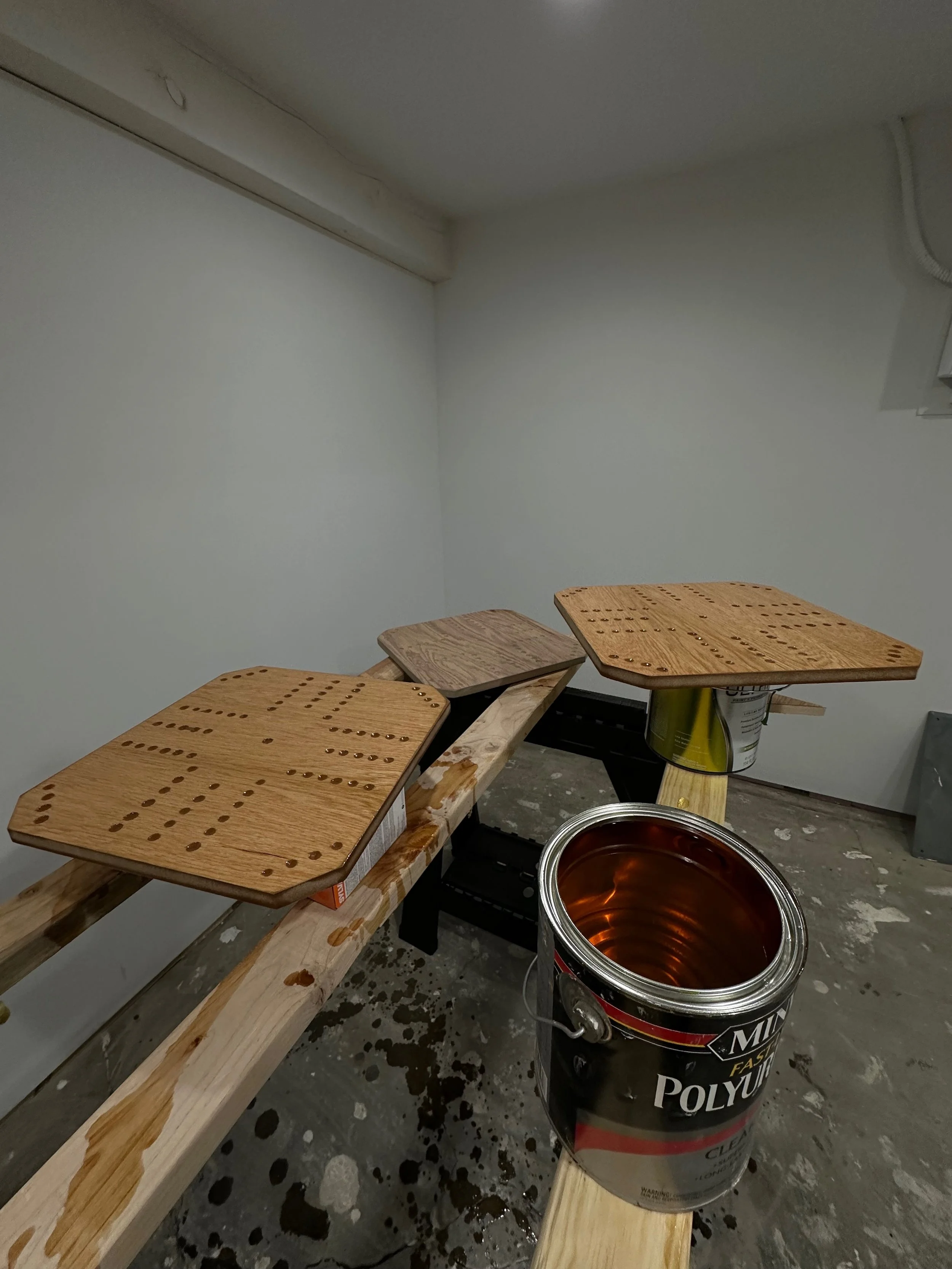
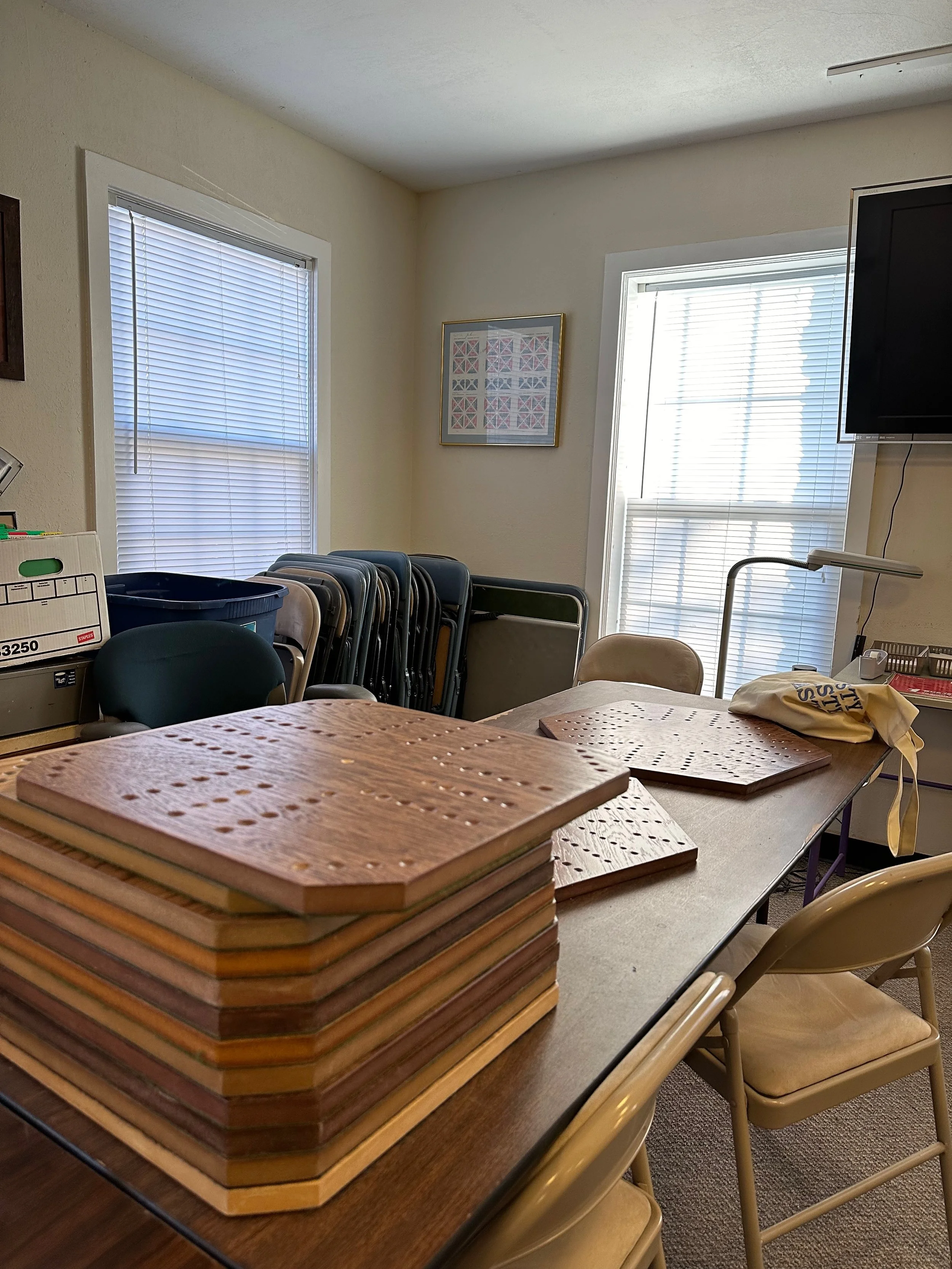
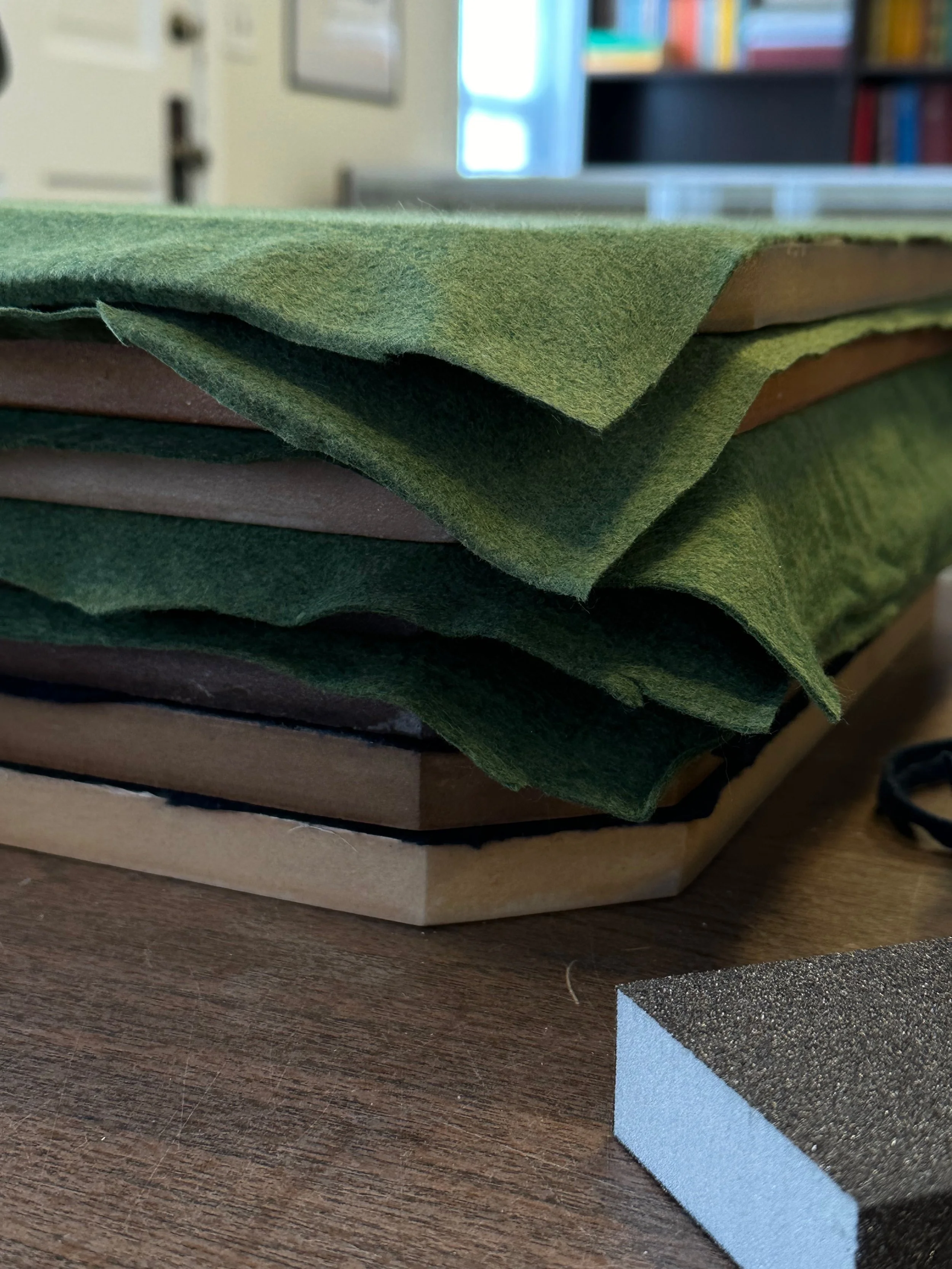
This project started from my idea of gifting my family their own wooden Marble Game boards for Christmas. With this idea, I contacted my Uncle and we got to work on creating the physical boards. We measured, cut, stained, and drilled divots for the marbles to sit on the board. We also applied a soft fabric to the bottom of the boards for a seamless feel when placed on a table. It was a very rewarding process and I was excited to create conceptual branding to tag along with the boards. It is one of my favorite projects I’ve ever worked on.
Challenge:
I wanted The Marble Game to have a visual identity that existed in my mind. I had always pictured the packaging to be sleek, nostalgic, luxurious, bold, and fun. That is what this project is all about: creating branding that communicates what I have always viewed The Marble Game to be. It is a game of competition, community, festivity, and the main event of so many memories. The packaging and branding needed to be personable and represent the history of the game within my experience.
Solution:
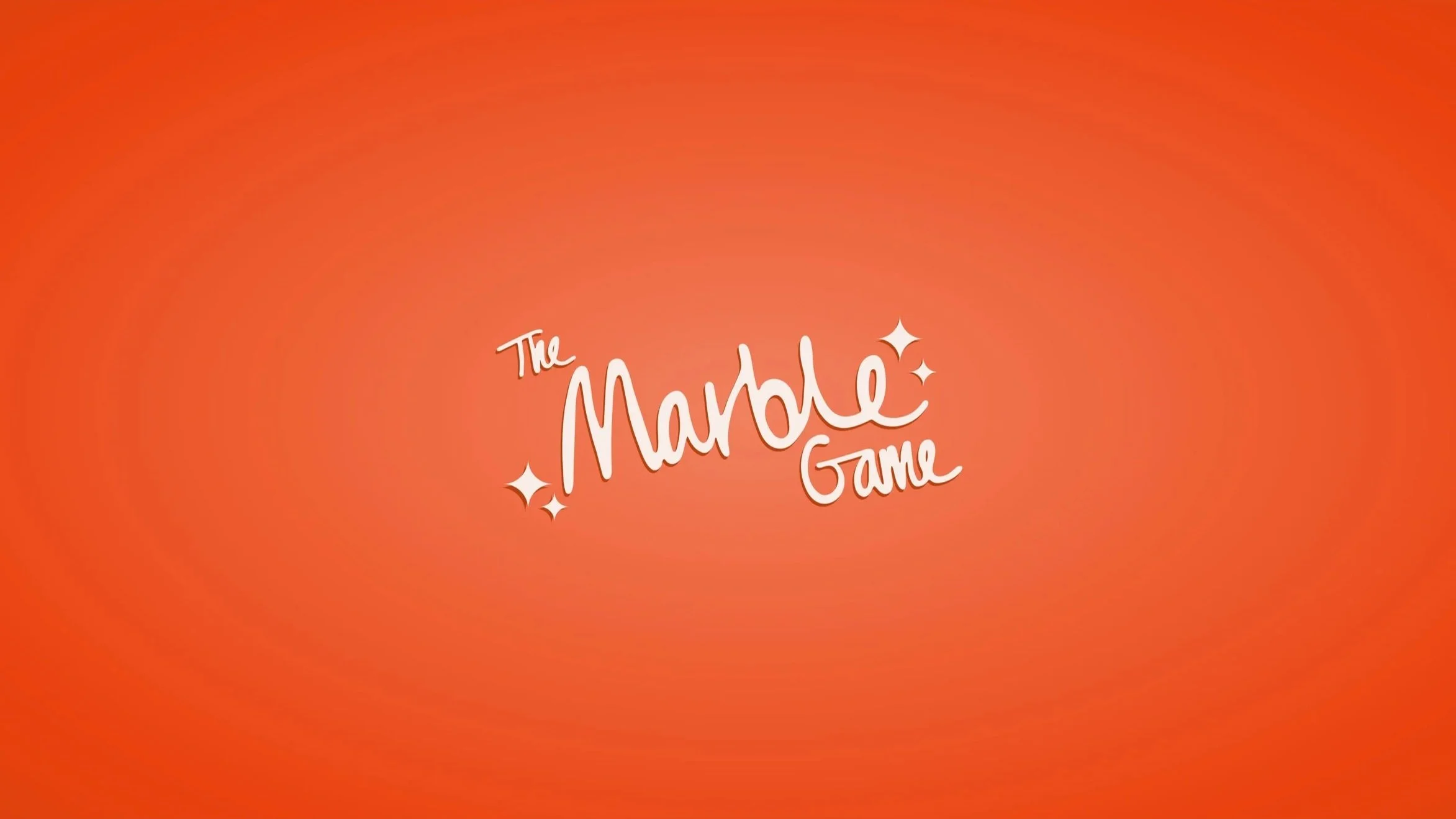
The logo itself is my handwriting, making it personable to myself and my family. The branding uses bold colors and minimalist approaches to keep the luxurious, sleek, and bold feel. It also uses rounded shapes, textures, and gradients, and vibrant colors to create a bold and nostalgic feeling.
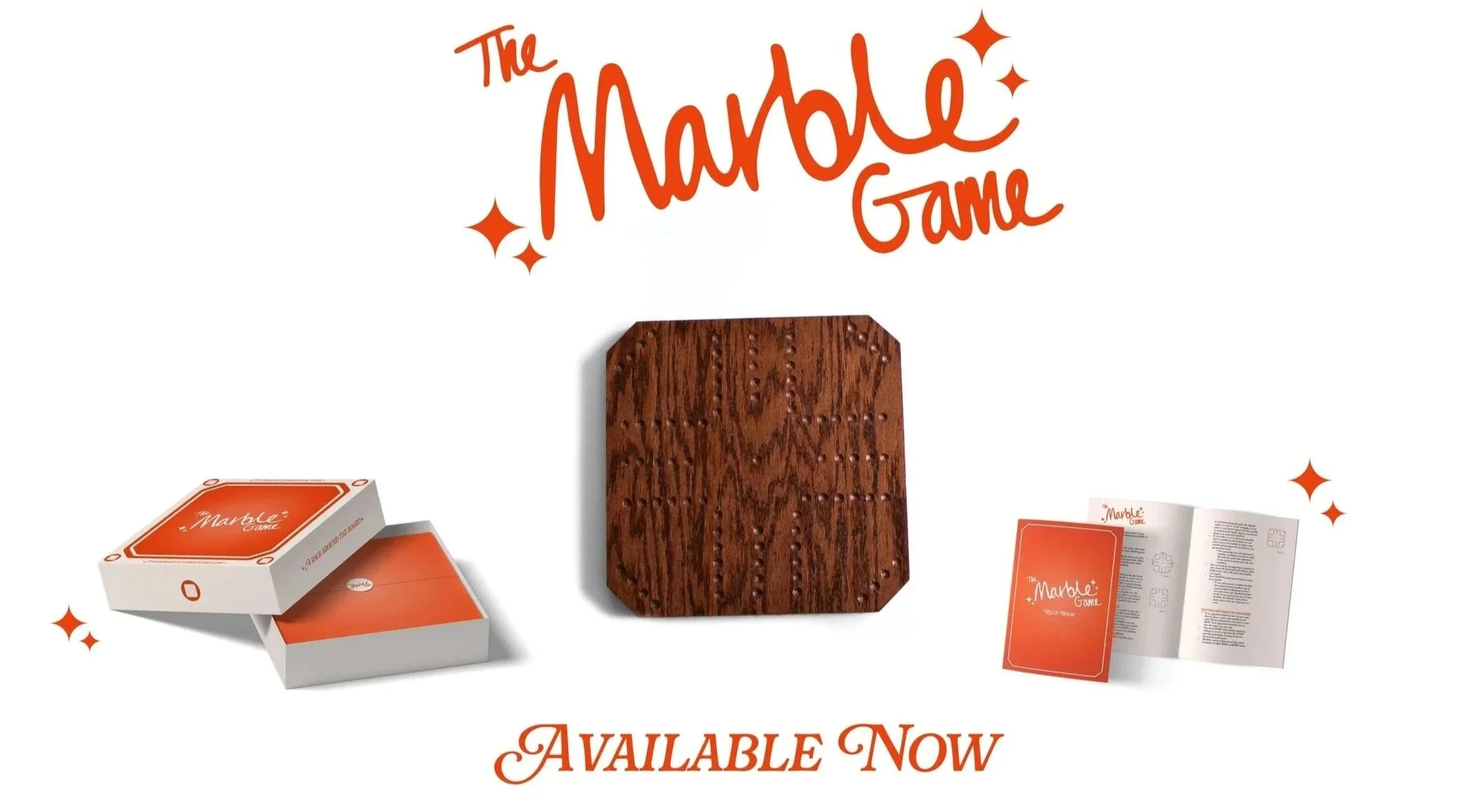
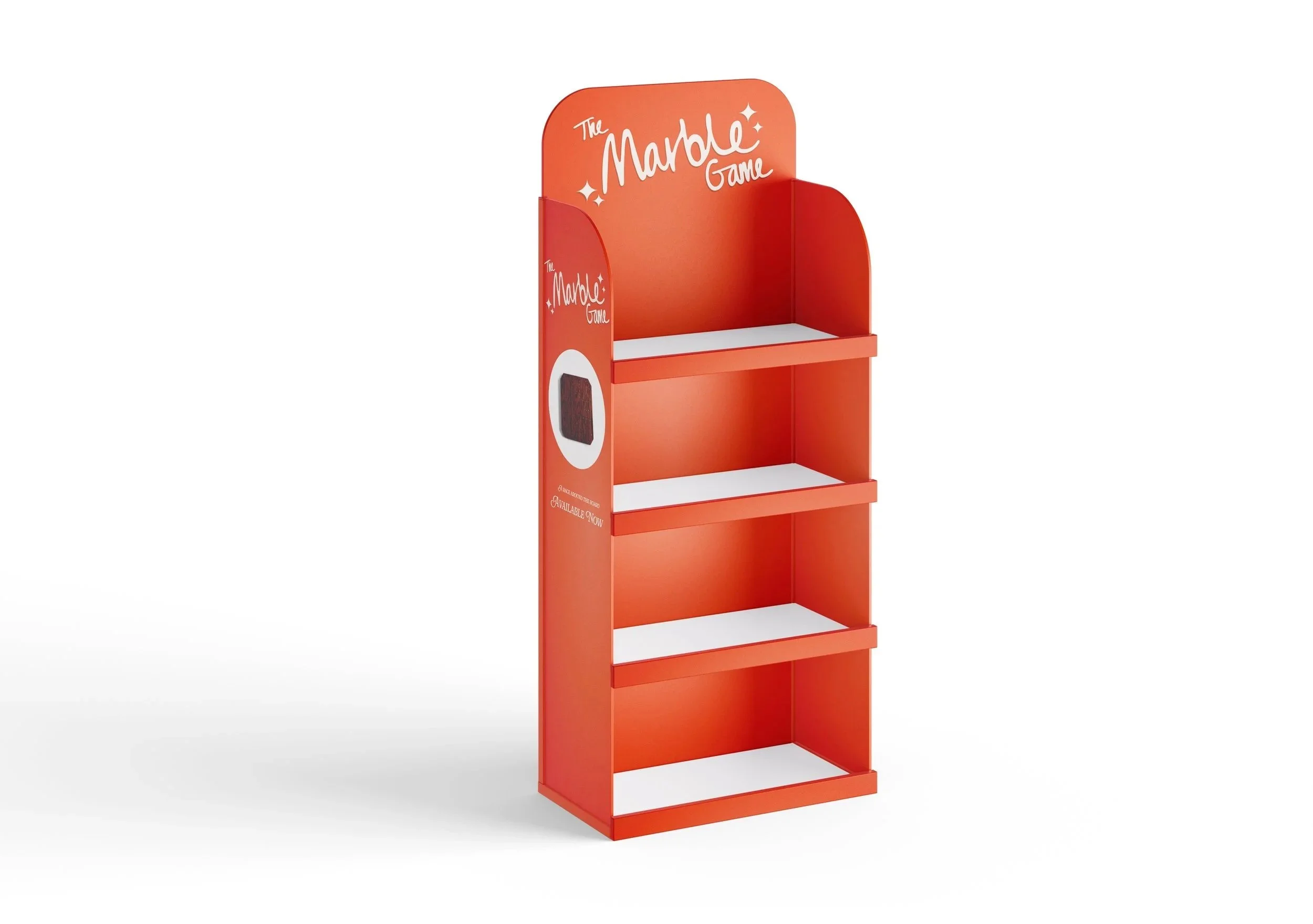
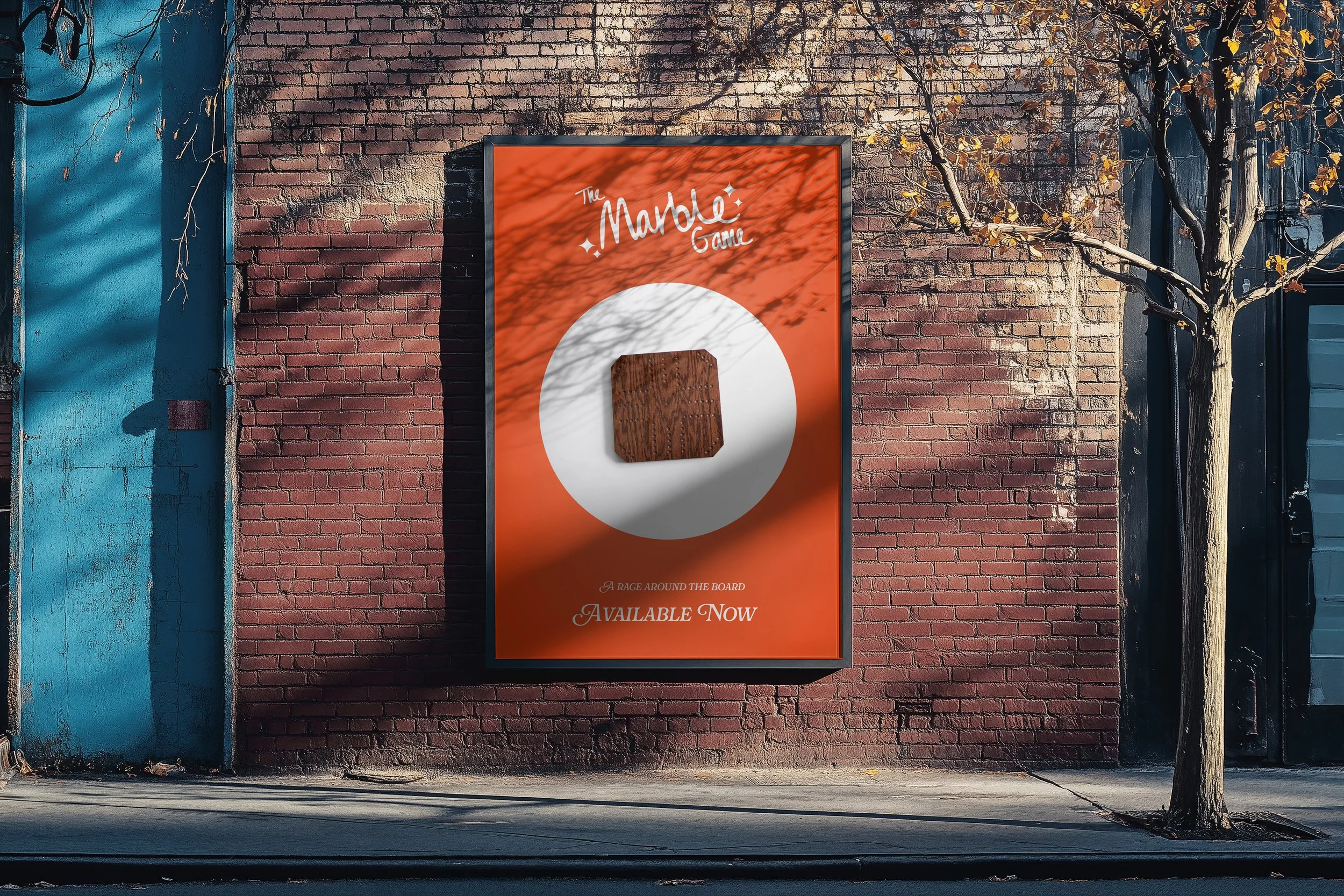
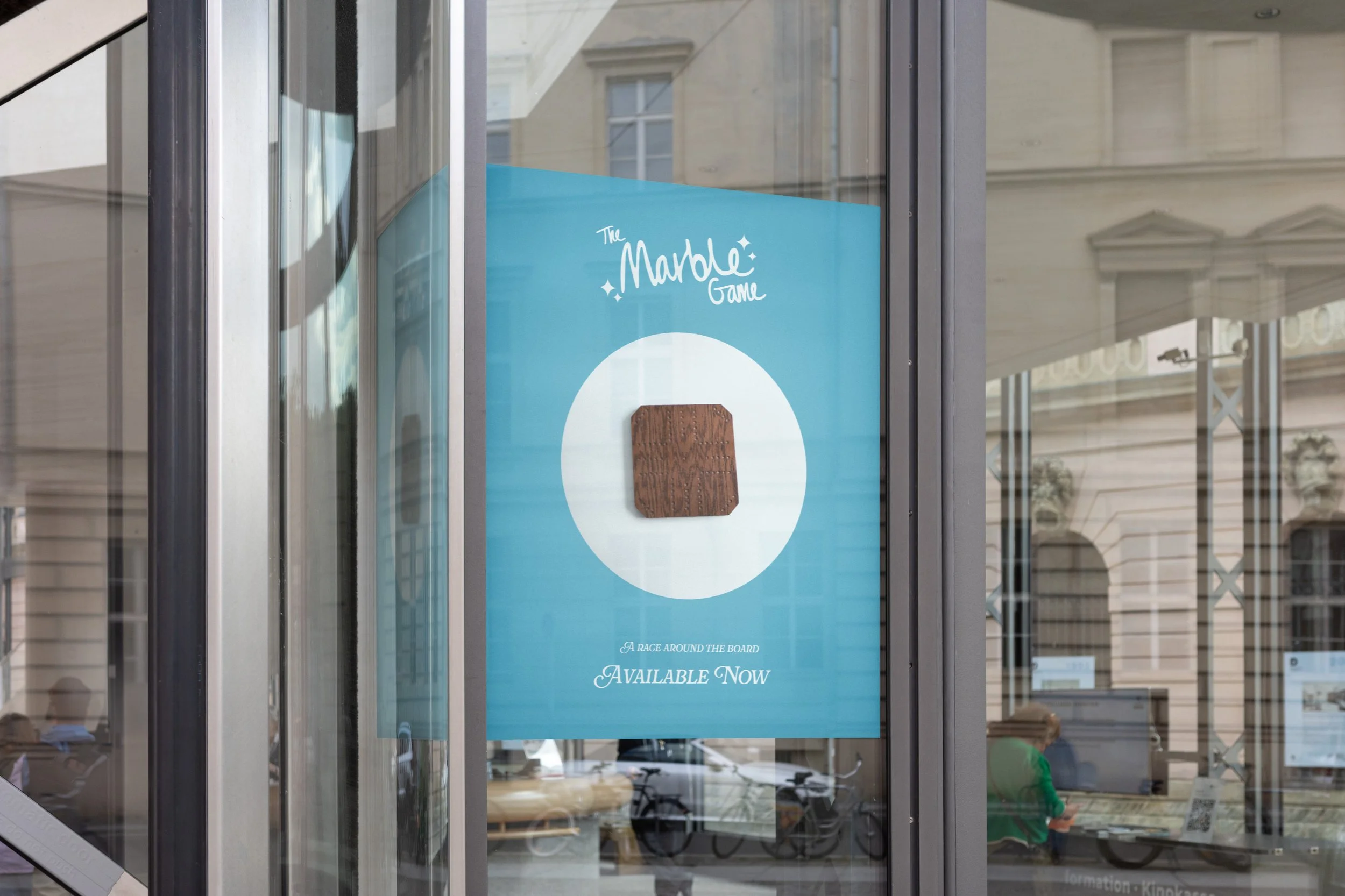
In the branding and packaging of the game, the board shape is used as a motif throughout, with the physical texture and image of the board even being used to create a bold and unique look, such as in the poster design. It keeps the elements unified while also showcasing the standout aspect of the game: its hand-made wooden board.
It is all about the board. A handmade, high-quality, and detailed wooden board. The Marble Game uses a sleek design that allows for the board to shine, while also keeping personable details sprinkled throughout.
Making the physical MARBLE board
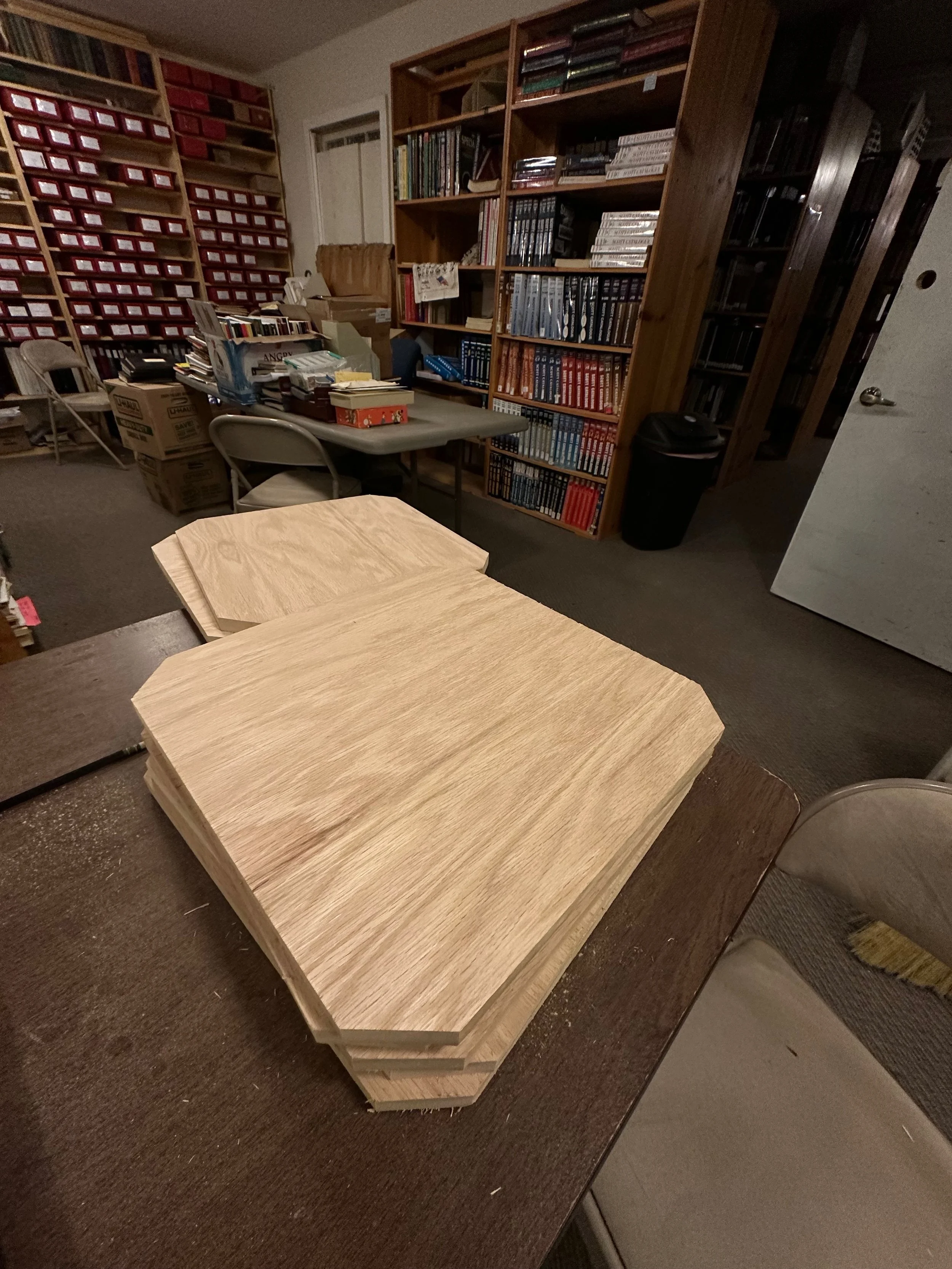
Before I begin to explain my process in the logo and branding design, I think we must talk about the experience crafting the wooden Marble Game boards. This project stemmed from wanting to give each of my family members and friends a Marble Game board of their own for Christmas. In order to do this, I called my Uncle to help, as he is very handy and has made them for family members in decades past.
We measured, cut, sanded, stained, and drilled divots for the marbles to sit on the board. We also applied a soft fabric to the bottom of the boards for a seamless and soft feel when placed on a table. The wood is high quality cabinetry wood. It took over a month for us to find time to meet and work on this project. This included time to physically work on the boards, but to also wait for the stain and glue to dry. It was a lot of effort, but very worth it.
Being able to give these boards as a gift was very rewarding and felt like we were keeping a family tradition alive. It is my favorite part of any get together or holiday. Physically making these boards and choosing the color of stain and fabric made it feel truly personal. I feel even more connected to this game and therefore feel inclined to create a logo and branding that feels personable as well.
Logo Process
My Vision for the logo
Sleek
Nostalgic
Luxurious
Bold
Fun
Sketches / Explorations
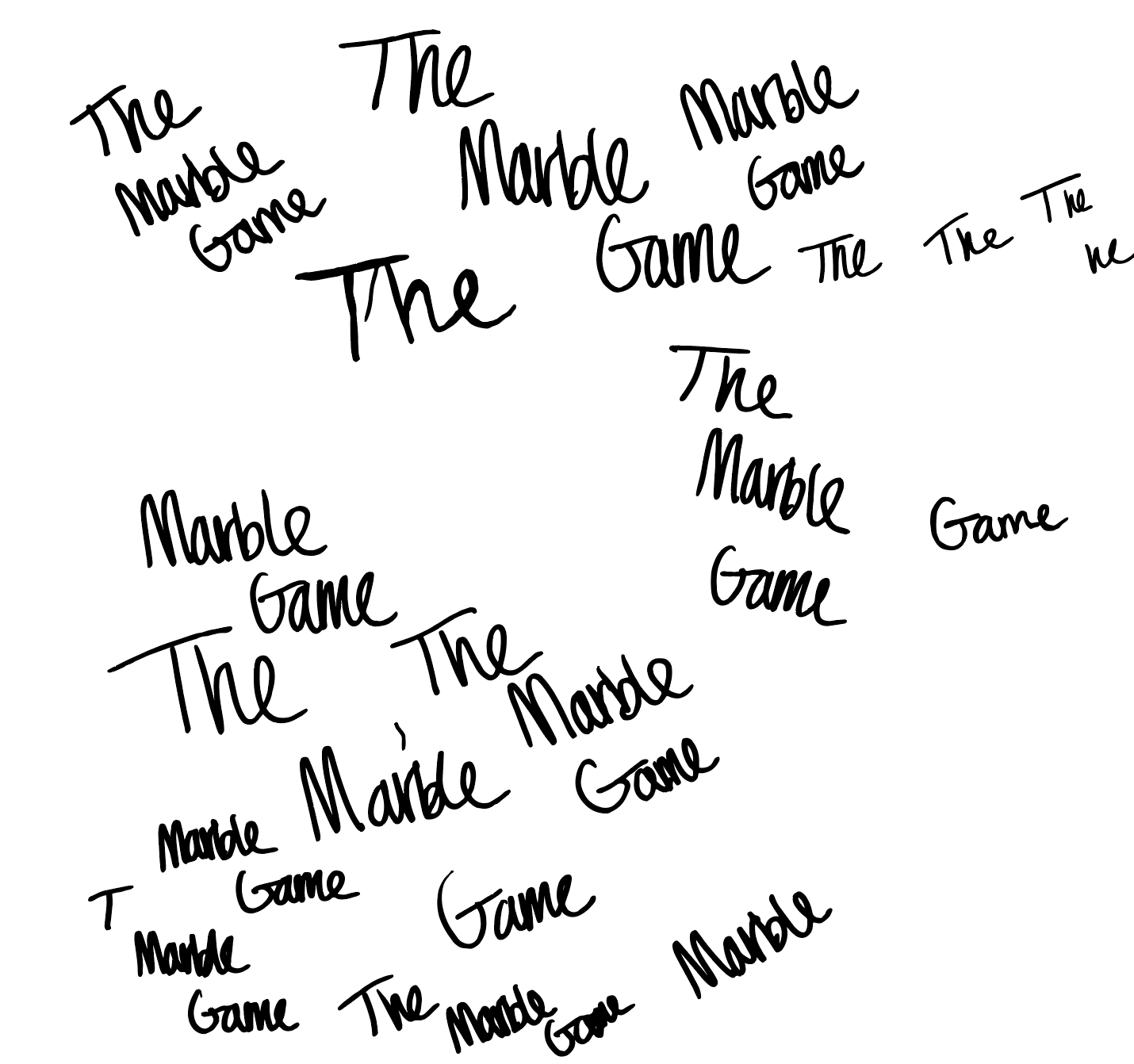
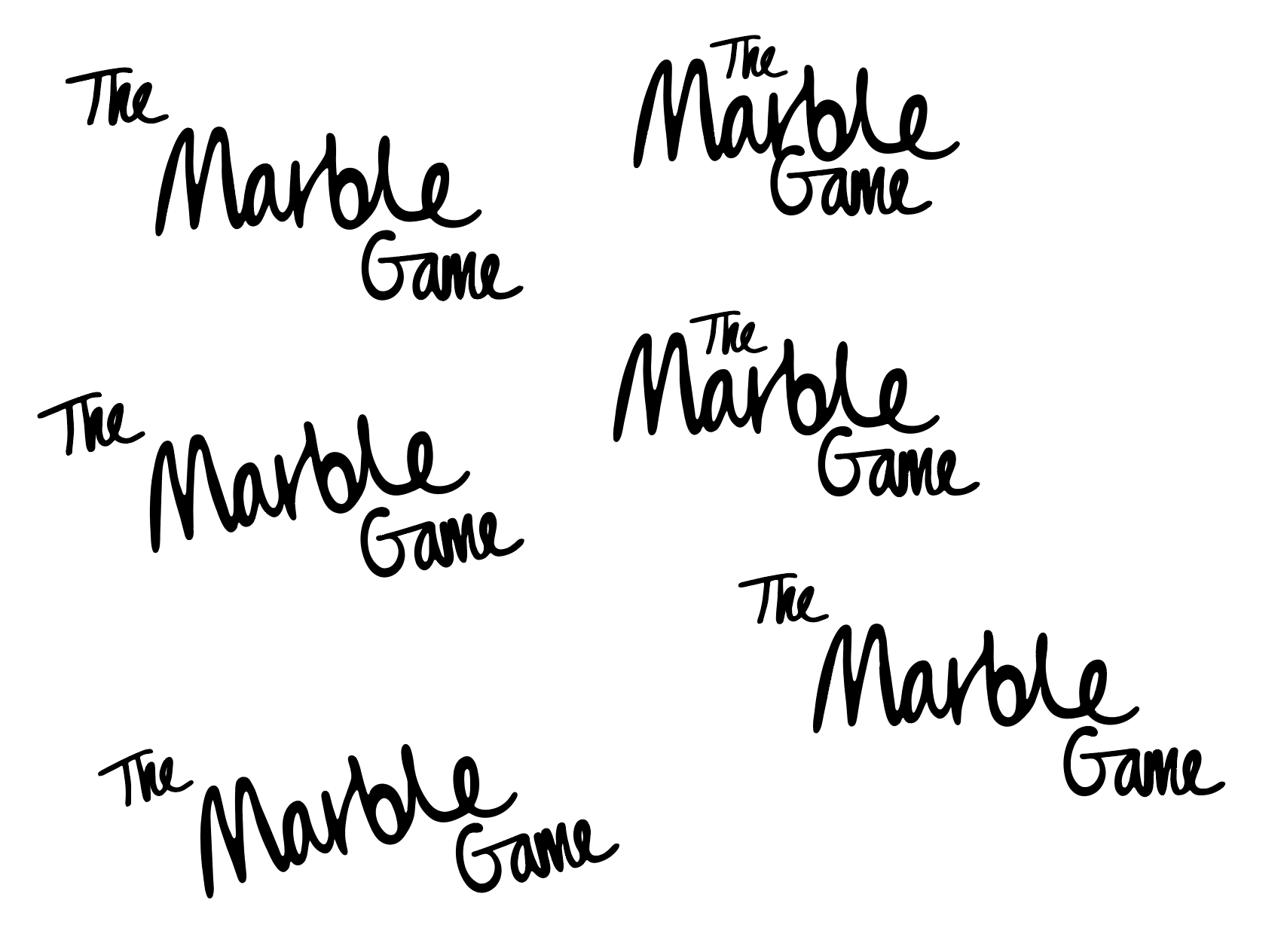
I knew that I wanted the logo to be in my handwriting. I loved the idea of a sleek package design with a hand-drawn logo. It adds some personality and makes it feel connected to myself and my family. I just kept rewriting “The Marble Game” over and over to see which felt the best.
Vector Explorations
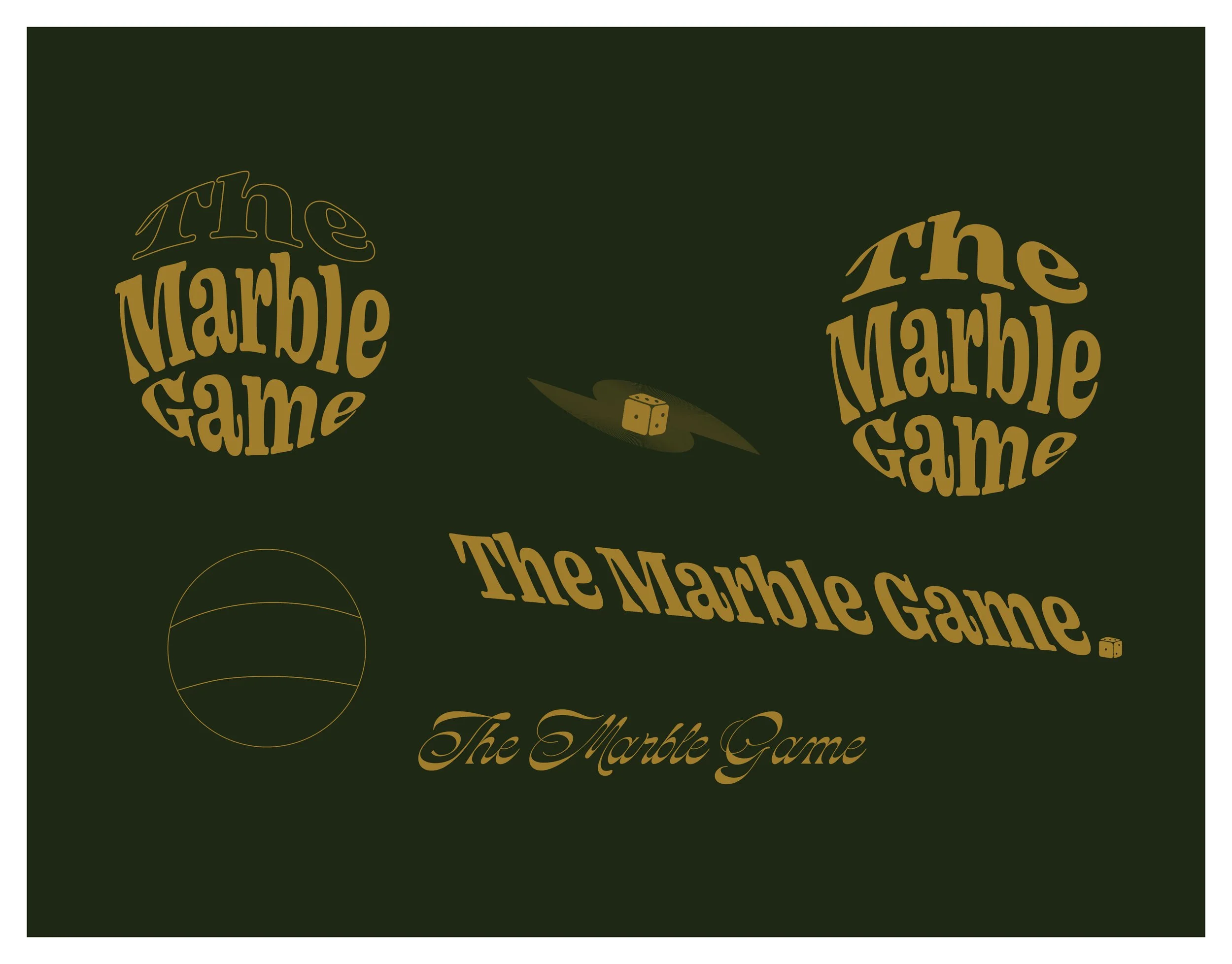
I don’t always do this, but sometimes I like to jump right into Illustrator and play around a little bit. I was exploring different typefaces and shapes, but ultimately liked the hand-drawn look I explored before. I also was playing around with different visuals, such as the marble itself and dice.
Final LOGO
Further Exploration
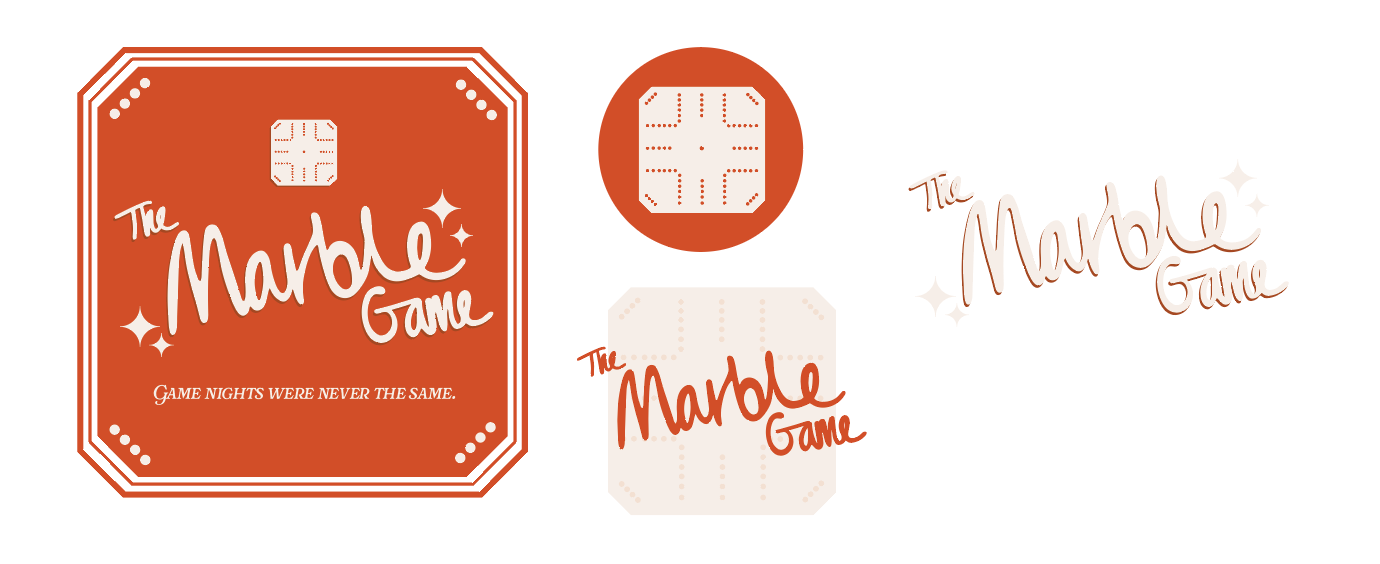
I loved the idea of using the board shape on the packaging, so I explored different illustrations of the board and the relationship to the logo. From this point, I knew a more minimalist approach was the direction it needed.
Packaging Mockup
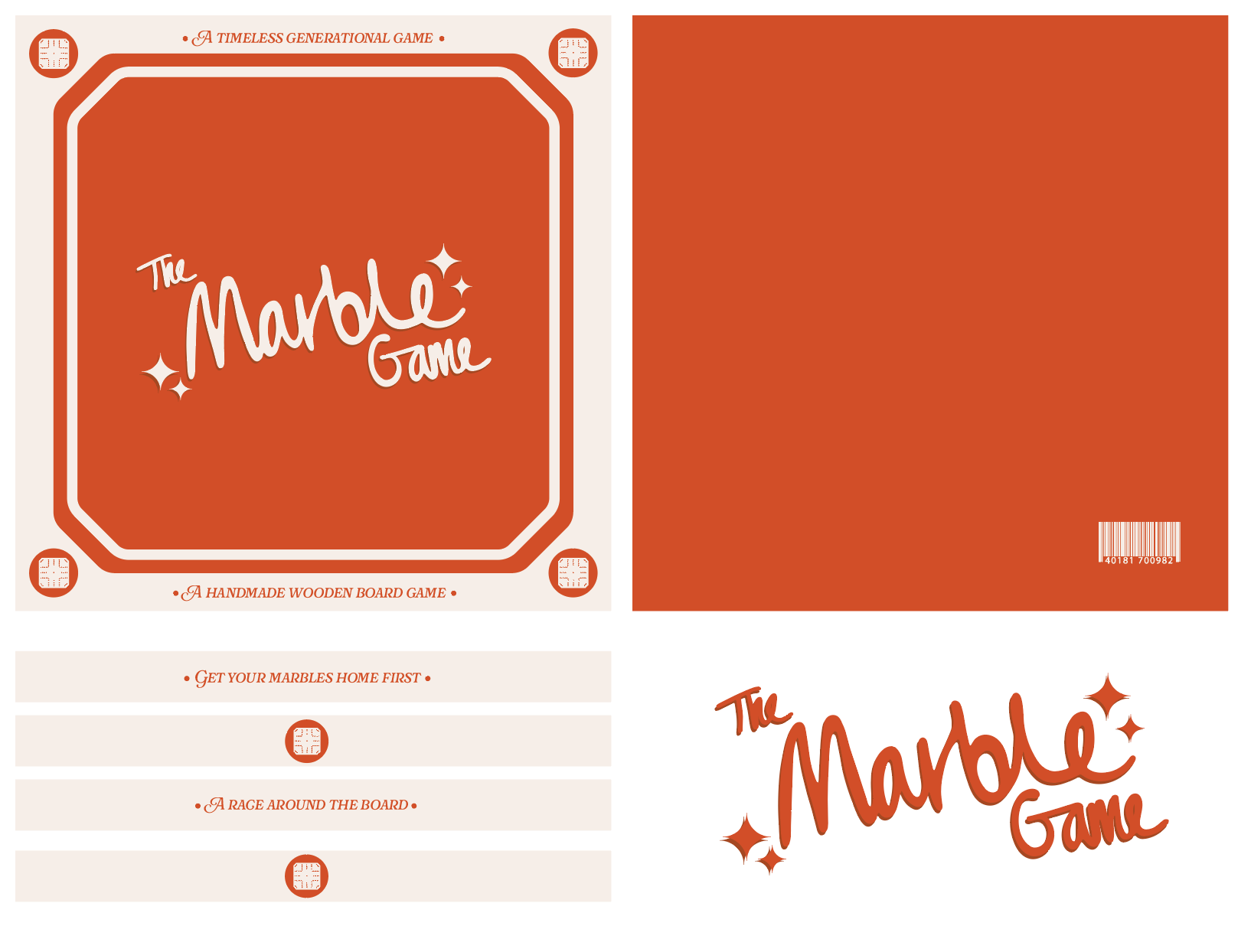
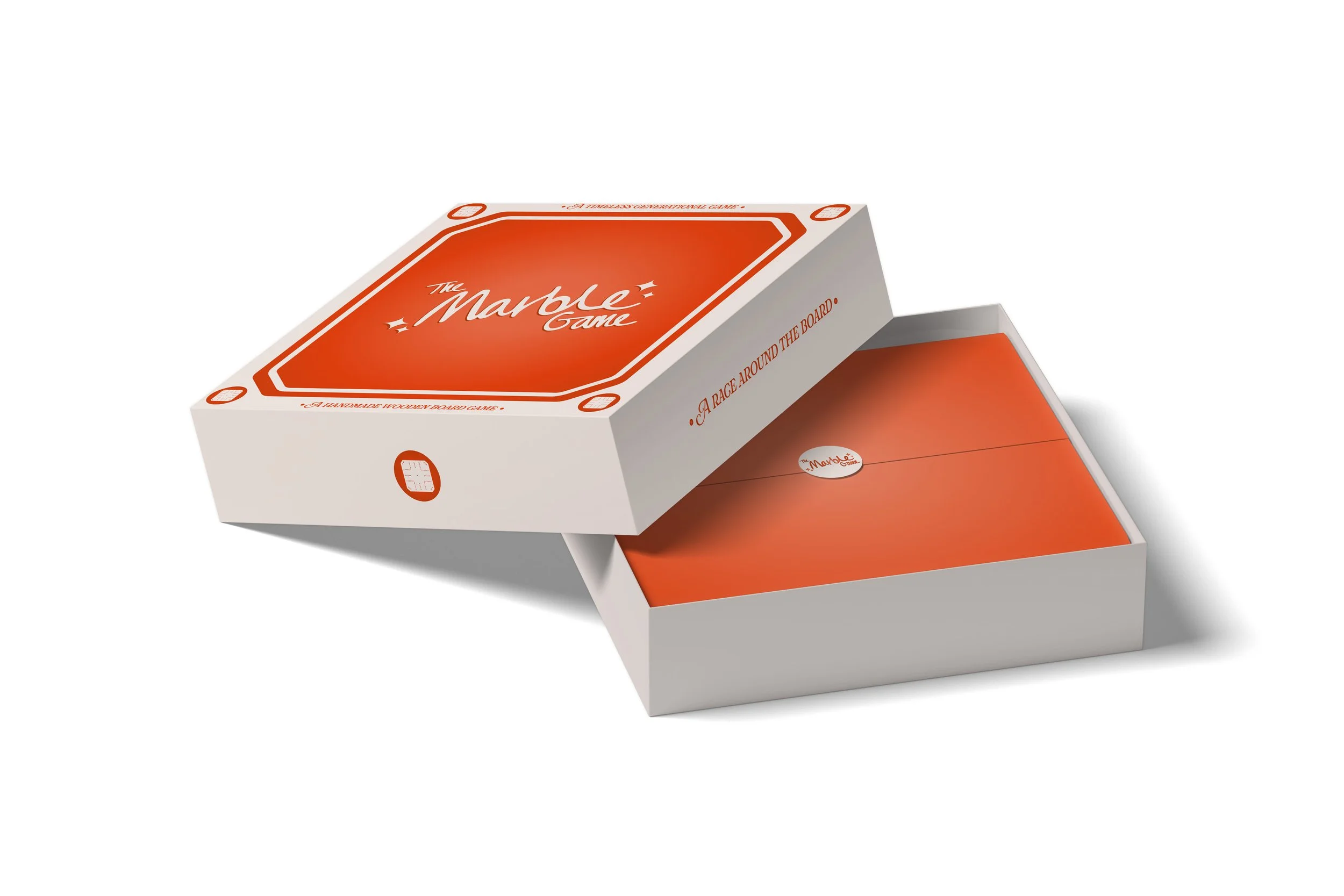
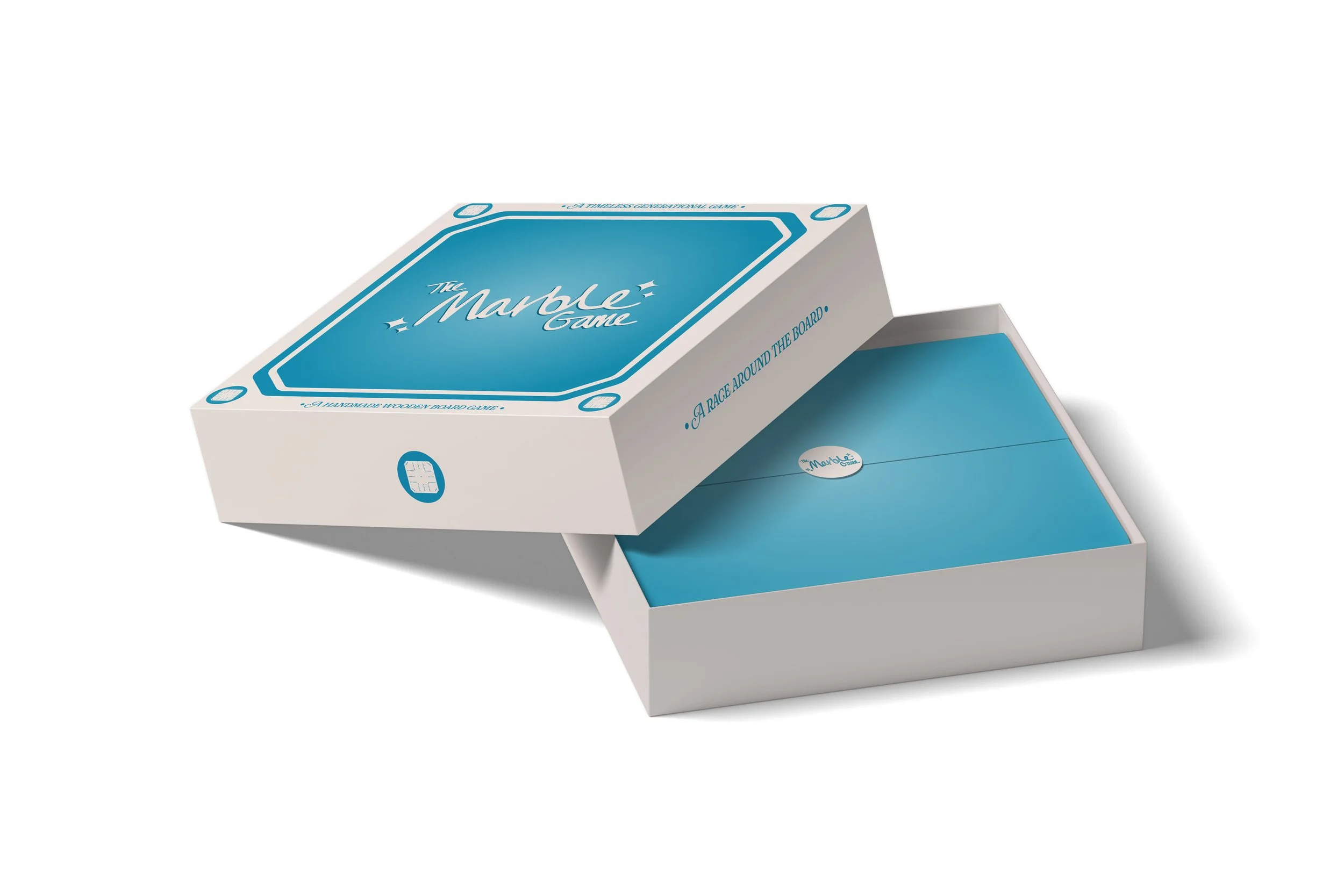
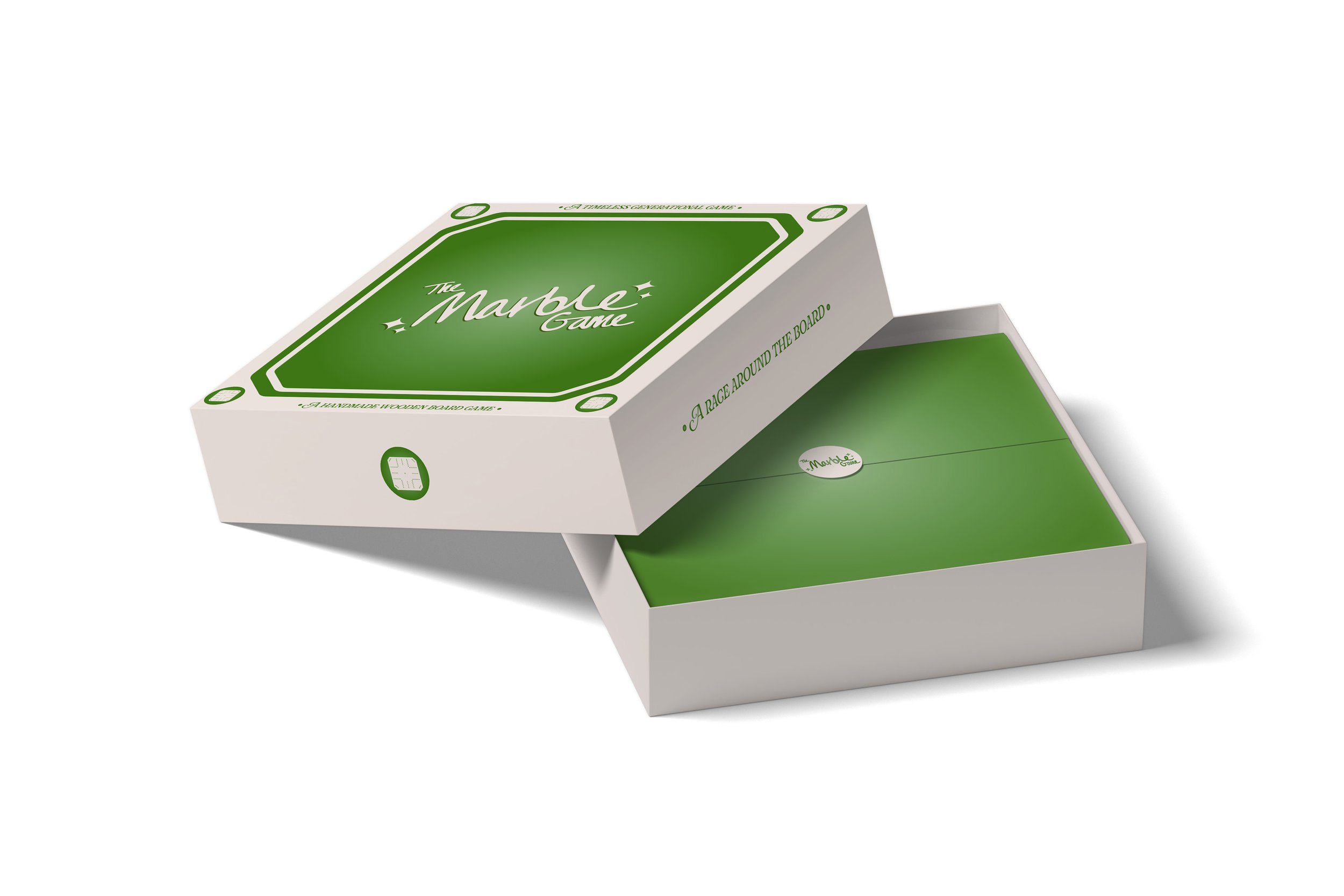
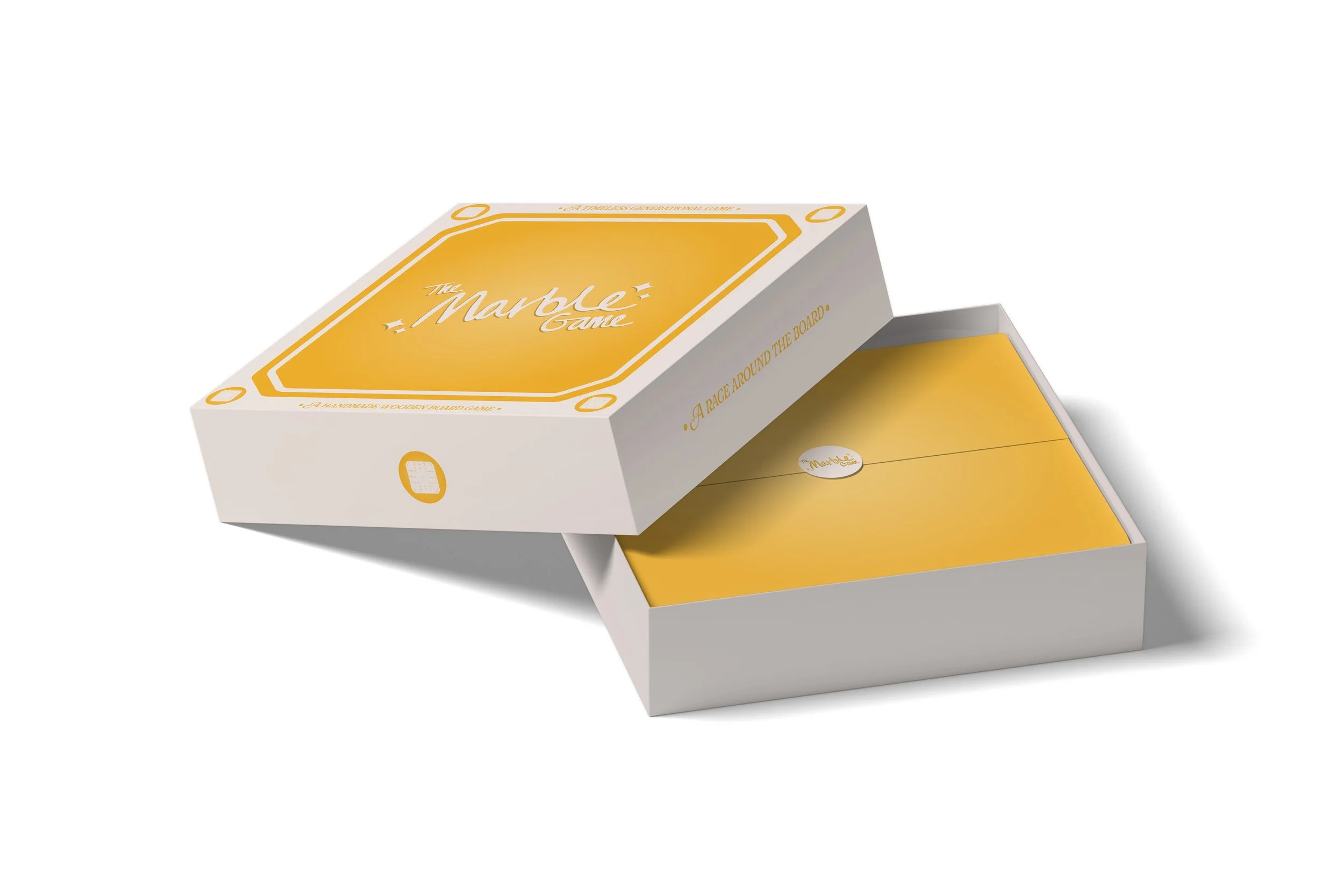
Using an abstracted shape of the board on the packaging was the next step. I thought that having a minimalist package design for such a textured and physically interesting board would make the consumer that much more interested in seeing the board, therefore inspiring them to purchase. Advertisements would show off the board itself, but I wanted the packaging to be simple, modern, fun, and luxurious.
My inspiration for the packaging came from vintage package design from the 70s and 80s. I loved the bold shapes, bright colors, and fun logotypes. These were decades when my parents, grandparents, aunts, and uncles were playing The Marble Game, so it is also a nod to that.
Gradient Added
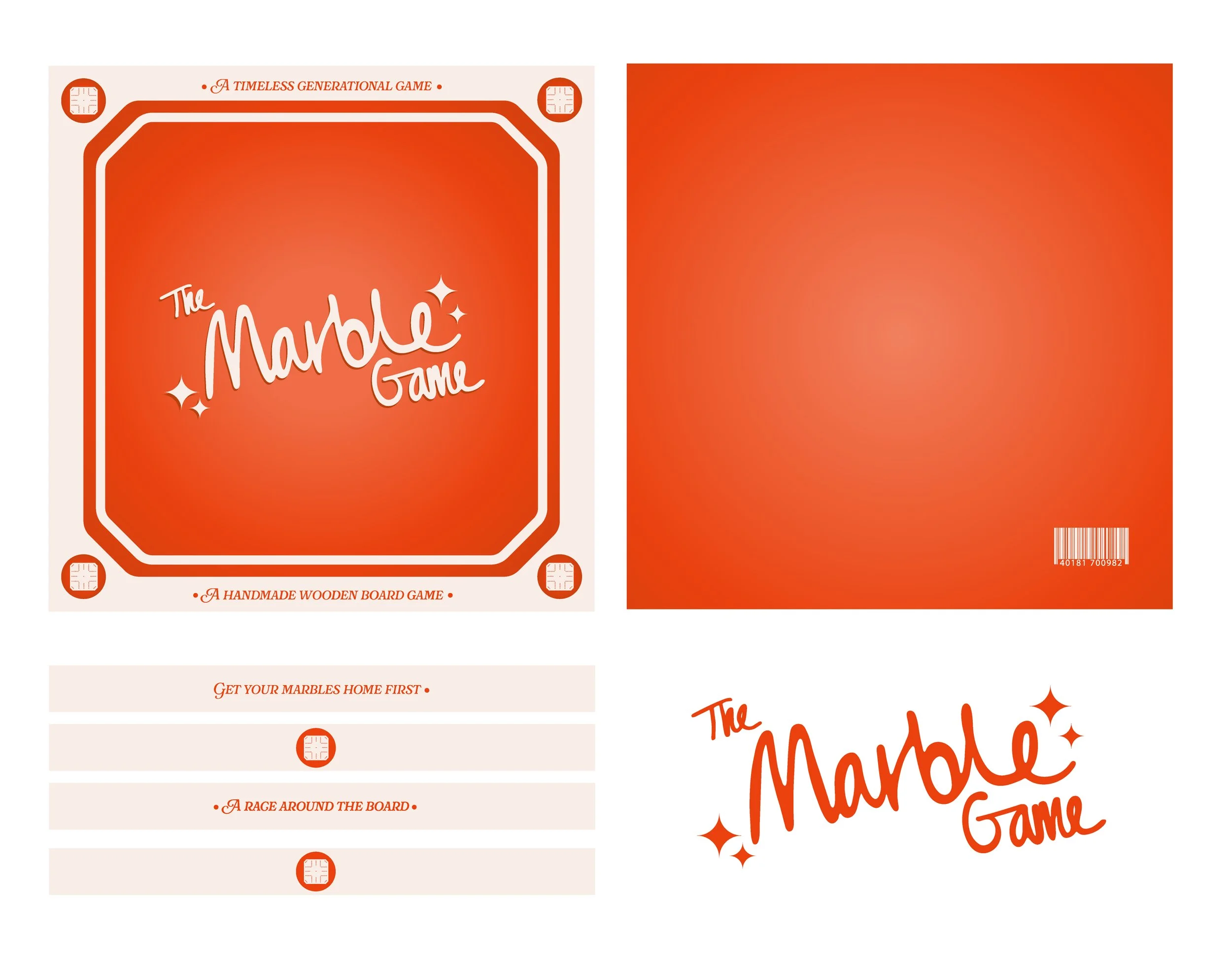
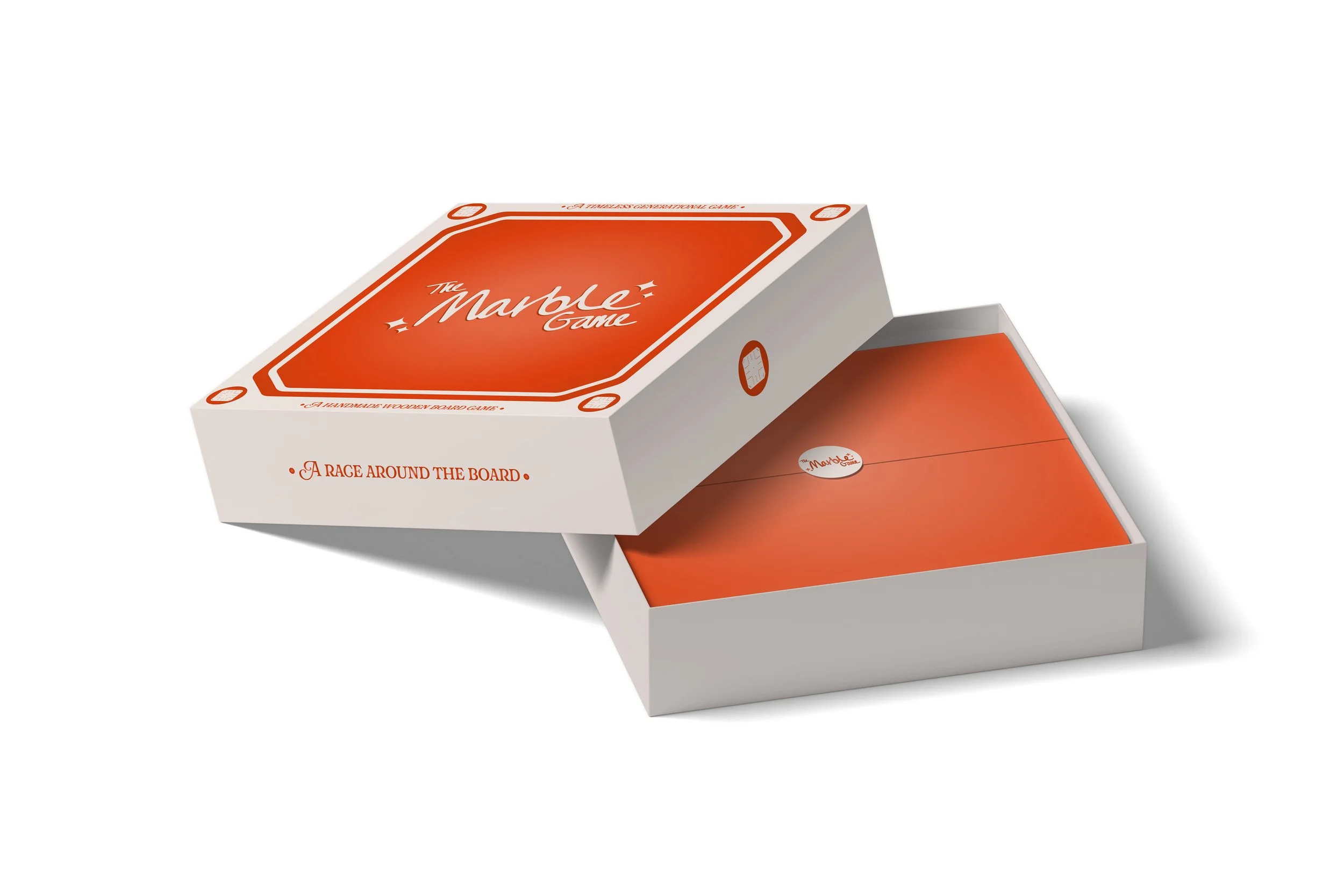
Color Variations Added
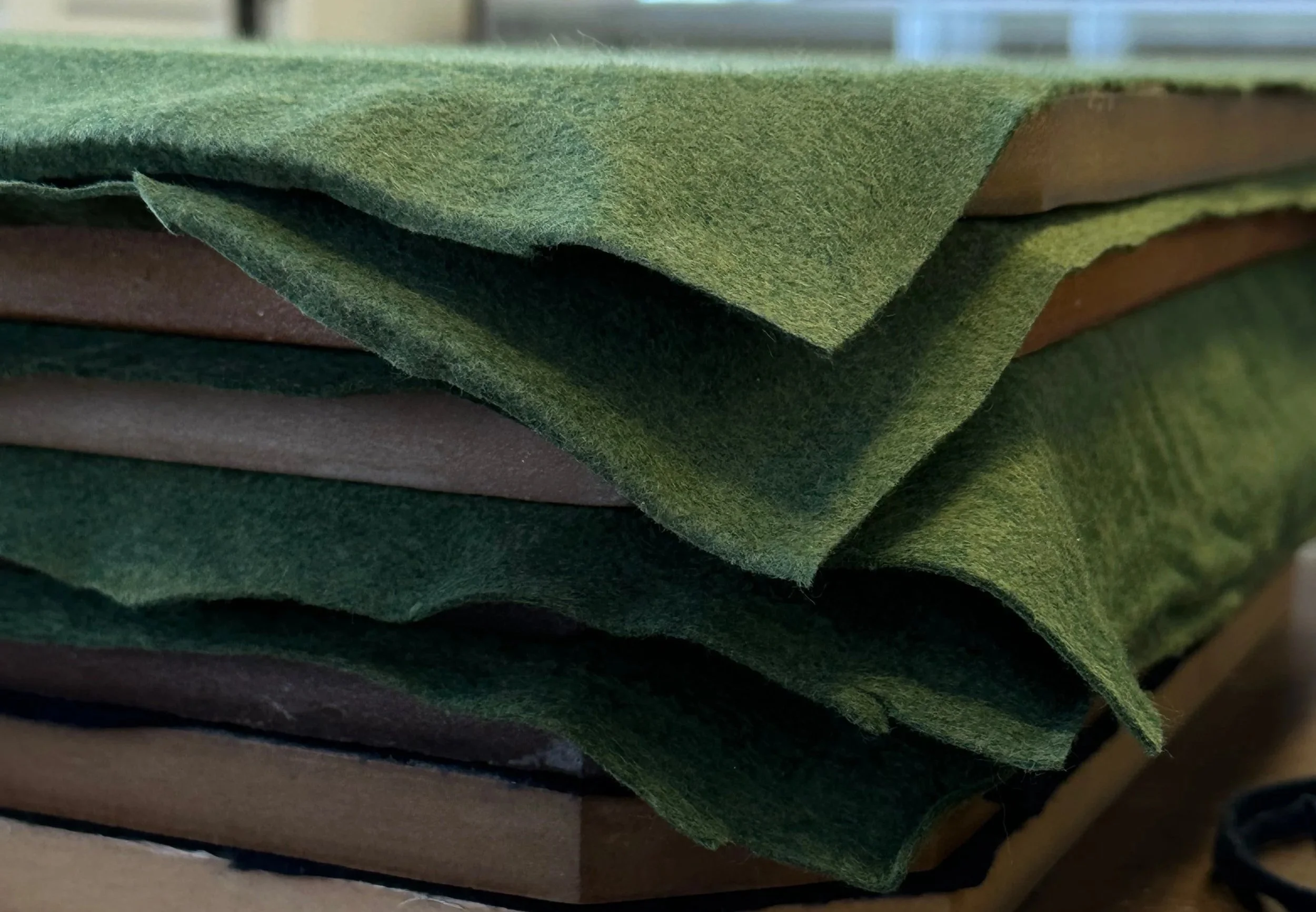
With the visual interest of the physical wooden board, I always imagined it being a fun decor item that could lean against a shelf or be part of the styling of an interior space. With this in mind, I figured more color variations of the felt on the bottom of the board could be incorporated. The boards that I made with my Uncle had green felt on the bottom (see below). With the color variations, the felt on the bottom would coordinate with the packaging colors, including red, blue, yellow, and green.
Final Design